
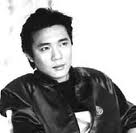
我想你不是真心的爱我 Wo xiang ni bu shi zhen xin de ai wo I think you don’t truly love me 于台烟 Yu tai yan 梁弘志 liang hong zhi: Chinese lyrics, pinyin, English translation, background information about master composer Liang Hongzhi, and Luo Da You paid respect to Liang video


我想你不是真心的爱我
Wo xiang ni bu shi zhen xin de ai wo
I think you don’t truly love me

于台烟
Yu tai yan

梁弘志
liang hong zhi

我想你不是真心的爱我 要不然你会将青春都给我
wo3 xiang3 ni3 bu2 shi4 zhen1 xin1 de5 ai4 wo3, yao5 bu4 ran2 ni3 hui4 jiang1 qing1 chun1 du1 gei3 wo3
I think you are not truly love me, otherwise you would have given me all your youth

我想你不是真心保护我 看我流泪却不给我安慰
wo3 xiang3 ni3 bu2 shi4 zhen1 xin1 bao3 hu4 wo3, kan4 wo3 liu2 lei4 que4 bu4 gei3 wo3 an1 wei4
I think you don’t truly protect me, otherwise you would not have watched my tearing but not given me comfort

我要你依稀多情的温柔 做一种完全属於我的梦
wo3 yao4 ni3 yi1 xi1 duo1 qing2 de5 wen1 rou2, zuo4 yi4 zhong3 wan2 quan2 shu3 yu2 wo3 de5 meng4
I want your vaguely passionate tenderness and to dream one kind of dream that all belongs to myself

我要你倾囊所有的真情 只我一个在未来的选择
wo3 yao4 ni3 qing1 nang3 suo3 you3 de5 zhen1 qing2, zhi3 wo3 yi2 ge4 zai4 wei4 lai2 de5 xuan3 ze2
I want you to empty all your pockets of true feeling (and give all of it to me), and only I, the only one person, will be in your future choices

不愿将命运掌握在别人的双手
bu2 yuan4 jiang1 ming4 yun4 zhang3 wo4 zai4 bie2 ren2 de5 shuang1 shou3
I am unwilling to let the fate be grasped in other people’s both hands

我将会坚持爱过之后再也无怨无尤
wo3 jiang1 hui4 jian1 chi2 ai4 guo4 zhi1 hou4 zai4 ye3 wu2 yuan4 wu2 you2
I will insist that I will have no complain, no blame after I have loved

其实我所盼望只是瞬间的挽留
qi2 shi2 wo3 suo3 pan4 wang4 zhi3 shi4 shun4 jian1 de3 wan3 liu2
Actually what I am looking forward to is just the stay of moments

让你细细看我 也能让我看看你是否 真爱我
rang4 ni3 xi4 xi5 kan4 wo3 ye3 neng2 rang4 wo3 kan4 kan4 ni3 shi4 fou3 zhen1 ai4 wo3
Let you examine me carefully; also let me carefully examine you to see whether or not you truly love me

Translated by Shu

Information about the composer Liang Hongzhi 梁弘志:

Liang Hongzhi was born in Kaohsiung, and his father was a naval generals. In his high school years, Liang wrote “Just Like Your Tenderness” (Tsai Chin) which was published after he went to college. That song was an overnight success in Taiwan. Liang has many great songs, such as: “choice “(Tsai Chin),” reading you “(Tsai Chin),” Wandering heart “(Jiang Yu Heng), ” Please come with me “(Julie Su Yu Kan-ping), and ” between half awake “(Alan Tam). He wrote nearly over 500 classic Chinese songs, and that achievement made him a well respected master composer in Taiwan popular music field. (Please check my song list to enjoy those beautiful songs composed by Liang)

Liang Hongzhi was commented as “a music master with emotional narrative style.” Liang also was a writer as well as a poet. Liang Hongzhi died of cancer when he was 47 years old in Taiwan.

Pay respect to Liang Hongzhi 向梁弘志致敬: Luo Da You played some Liang’s best songs and explained why Liang was a great composer and more …

連環泡-梁弘志&齊豫訪問
Posted in Chinese songs, Famous Chinese singers | Tagged , , , , , , | Comments Off on 我想你不是真心的爱我 Wo xiang ni bu shi zhen xin de ai wo I think you don’t truly love me 于台烟 Yu tai yan 梁弘志 liang hong zhi: Chinese lyrics, pinyin, English translation, background information about master composer Liang Hongzhi, and Luo Da You paid respect to Liang video

Learn Chinese – learn Mandarin – proverb – How to say “All roads lead to Rome” in Chinese: 条条大路通罗马。Tiao2 tiao2 da4 lu4 tong1 luo2 ma3. Information about the silk road, and Liang Jing ru 梁静茹 si lu (silk road) 丝路 – jasmine leong (fish)

How to say “All roads lead to Rome” in Chinese: 条条大路通罗马。Tiao2 tiao2 da4 lu4 tong1 luo2 ma3. Tiao2 tiao2 (条条 tiao2 originally is measure word for road, here tiao2 tiao2 functions as attribute — each long long (road) — to modify the noun — 大 路 da4 lu4) da4 (大 adjective, big) lu4 (路 noun, road) tong1 (通 verb, to go through / to connect) luo2 ma3 (罗马 noun, Rome).

The origin of the proverb initially means — all roads did lead to Rome.

The Romans were extremely skilled road makers (造路者 zao4 lu4 zhe5, road builder), and they were the first to establish a grand road system (道路系统 dao4 lu4 xi4 tong3). They were also the first to use mile-markers.The ancient Romans designed their roads purposefully so that all the road led to Rome to make it the central hub with the purpose (目的 mu4 di4) to prevent its provinces from forming resistance against the Empire (帝国 di4 guo2).

The proverb — All roads lead to Rome also means that there are many different ways to reach the same outcome or destination (目的地 mu4 di4 di4).

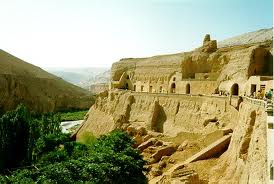
Speaking of the way or the road to Rome, we should also know that there is one kind of road called the Silk Road (丝路 si1 lu4).

What is the silk road?

The Silk Road was not an exact road. It was not paved as University Avenue or Airport Way. The silk road contained many routes or any route as long as they could lead ancient people from China to Rome or vice versa. From ancient China to Rome, the distance (距离 ju4 li2) was around four thousand miles.

Why it is called the silk road?

The merchants (商人 shang1 ren2) in Rome and China had something the other wanted. Rome had gold and silver and precious gems (宝石 bao3 shi2). China had silk and spices and ivory (象牙 xiang4 ya2). The Romans were glad to find out what they had been looking for — “the Silk People.” Silk quickly became popular in Rome.

It was dangerous to travel along the Silk Road. There were wild white-hot sand dunes in the desert (沙漠 sha2 mo4), brutal winds, poisonous snakes (毒蛇 du2 she2), and bandits and robbers too. Merchants were smart people, they used the relay strategy. Some of traders did not make the whole trip; they worked in relays, and each trader went a certain distance to exchange their goods for other goods, and hopefully returned to their home. There were many routes in the so called the silk road, but there were three main (主要 zhu3 yao4) routes (路线 lu4 xian4).

Northern Route – Westward to Black Sea
*

Central Route – Westward to Persia, Mediterranean Sea (地中海 di4 zhong1 hai3), Rome
*

Southern Route – Westward to Iran (伊朗 yi1 lang3), India (印度 yin4 du4)

Over the centuries, along the Silk Road developed a civilization (文明 wen2 ming2) of its own. Along the road, there were temples, cities and a lot of other attractions. The traveling on the silk road became easier as years went by; but, it was never easy.

Hope you enjoy today’s one proverb and many phrases a day, and now it’s time to find a song. Here you go, a great song once again:) I am always amazed at the result of song search!!!! It is a song that I never heard before ….and it is called silk road, right to the point!!!

Liang Jing ru 梁静茹 si lu (silk road) 丝路 – jasmine leong (fish)

Posted in Chinese history, Chinese proverbs, One Chinese sentence a day | Tagged , , , , , , | Comments Off on Learn Chinese – learn Mandarin – proverb – How to say “All roads lead to Rome” in Chinese: 条条大路通罗马。Tiao2 tiao2 da4 lu4 tong1 luo2 ma3. Information about the silk road, and Liang Jing ru 梁静茹 si lu (silk road) 丝路 – jasmine leong (fish)