
我很丑可是我很温柔
Wo hen chou ke shi wo hen wen rou
I am very ugly, but I am very gentle and tender
赵传
Zhao Chuan
每一个晚上 在梦的旷野 我是骄傲的巨人
mei3 yi2 ge5 wan3 shang4, zai4 meng4 de5 kuang4 ye3, wo3 shi4 jiao1 ao4 de5 ju4 ren2
At each night, in the wilderness of dreams, I am a proud giant;
每一个早晨 在浴室镜子前 却发现自己活在剃刀边缘
mei3 yi2 ge5 zao3 chen2, zai4 yu4 shi4 jing4 zi5 qian2, que4 fa1 xian4 zi4 ji3 huo2 zai4 ti4 dao1 bian1 yuan2
In each morning, in front of the mirror of bathroom, yet I discovered that I am living on the edge of razors
在钢筋水泥的森林里 在呼来唤去的生涯里
zai4 gang1 jin1 shui3 ni2 de5 sen1 lin2 li3 zai4 hu1 lai2 huan4 qu4 de5 sheng1 ya2 li3
In the forest of steel reinforced concrete, in the life of being called to come here and go there
计算着梦想和现实之间的差距
ji4 suan4 zhe5 meng4 xiang3 he2 xian4 shi2 zhi1 jian1 de5 cha1 ju4
Calculate the differences between dreams and reality
我很丑 可是我很温柔
wo3 hen3 chou3 ke3 shi4 wo3 hen3 wen1 rou2
I am very ugly, but I am very gentle and tender
外表冷漠 内心狂热 那就是我
wai4 biao3 leng3 mo4 nei4 xin1 kuang2 re4 na4 jiu4 shi4 wo3
Cold and detached outward appearance, passionate inner heart — that is me
我很丑 可是我有音乐和啤酒
wo3 hen3 chou3 ke3 shi4 wo3 you3 yin1 le4 he2 pi2 jiu3
I am very ugly, but I have music and beers
一点卑微 一点懦弱 可是从不退缩
yi4 dian3 bei1 wei2, yi4 dian3 nuo4 ruo4, ke3 shi4 cong2 bu4 tui4 suo1
A bit petty and low, a bit cowardly and weak, but I never cower
每一个早晨 在都市的边缘 我是孤独的假面
mei3 yi2 ge5 zao3 chen2, zai4 du1 shi4 de5 bian1 yuan2, wo3 shi4 gu1 du2 de5 jia3 mian4
In every morning, on the edge of city, I am a lonely mask
每一个晚上 在音乐的旷野 却变成狂热嘶吼的巨人
mei3 yi2 ge5 wan3 shang4, zai4 yin1 yue4 de5 kuang4 ye3, que4 bian4 cheng2 kuang2 re4 si1 hou3 de5 ju4 ren2
At every night, in the wilderness of music, yet I become a passionate and roaring giant
在一望无际的舞台上 在不被了解的另一面
zai4 yi2 wang4 wu2 ji4 de5 wu3 tai2 shang4, zai4 bu2 bei4 liao3 jie3 de5 ling4 yi2 mian4
On the one gaze can’t see the boundary stage; on the other side that couldn’t be understood
发射出生活和自我的尊严
fa1 she4 chu1 sheng1 huo2 he2 zi4 wo3 de5 zun1 yan2
Radiate life and self dignity
我很丑 可是我很温柔
wo3 hen3 chou3, ke3 shi4 wo3 hen3 wen1 rou2
I am very ugly, but I am very gentle and tender
白天黯淡 夜晚不朽 那就是我
bai2 tian1 an4 dan4, ye4 wan3 bu4 xiu3, na4 jiu4 shi4 wo3
Dimmy daytime and immortal nighttime, that is me
我很丑 可是我有音乐和啤酒
wo3 hen3 chou3, ke3 shi4 wo3 you3 yin1 yue4 he2 pi2 jiu3
I am very ugly, but I have music and beers
有时激昂 有时低首 非常善于等候
you3 shi2 ji1 ang2, you3 shi2 di1 shou3, fei1 chang2 shan4 yu2 deng3 hou4
Sometimes got stirred to indignation, sometimes lowed the head, and I am very good at waiting
Translated by Shu
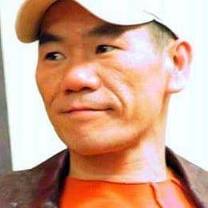
Zhao Chuan (June 18, 1961 -) is a famous male singer in Taiwan. His most popular song is “I am very ugly, but I am very gentle and tender.” His other well known songs are 我是一隻小小鳥 “I am a Little Bird” and 我終於失去了你 “I finally lost you. ”
The high-pitched, hoarse voice is the most special feature of Chao Chuan, and his not so celebrity look in pop music also is legendary. Inside his lyrics, there are sincerity and humanity which move people deeply. Zhao Chuan has won many Chinese rock fans of all ages, many of them are young Chinese people.
Quotes about appearance:
Appearances are not held to be a clue to the truth. But we seem to have no other. ~Ivy Compton-Burnett
I have always a sacred veneration for anyone I observe to be a little out of repair in his person, as supposing him either a poet or a philosopher. ~Jonathan Swift
It is only when the mind and character slumber that the dress can be seen. ~Ralph Waldo Emerson
Mirrors should think longer before they reflect. ~Jean Cocteau
Let us be grateful to the mirror for revealing to us our appearance only. ~Samuel Butler, Erewhon
Many a man has fallen in love with a girl in a light so dim he would not have chosen a suit by it. ~Maurice Chevalier
There is no actual law that says that a person of inner beauty cannot also maintain an appearance. ~Robert Brault, www.robertbrault.com
Men in general judge more from appearances than from reality. All men have eyes, but few have the gift of penetration. ~Niccolo Machiavelli
A pair of powerful spectacles has sometimes sufficed to cure a person in love. ~Friedrich Nietzsche, Human, All Too Human
Pretty is the queen that rules our land. ~Carrie Latet
The weirder you’re going to behave, the more normal you should look. It works in reverse, too. When I see a kid with three or four rings in his nose, I know there is absolutely nothing extraordinary about that person. ~P.J. O’Rourke
Sometimes I wonder – if I were drop-dead handsome, and every woman I met actually dropped dead, would I ever get tired of it? ~Robert Brault, www.robertbrault.com
Polished brass will pass upon more people than rough gold. ~Lord Chesterfield
The world is governed more by appearance than realities so that it is fully as necessary to seem to know something as to know it. ~Daniel Webster
Things do not pass for what they are, but for what they seem. Most things are judged by their jackets. ~Baltasar Gracian
The source of quotes is:
http://www.quotegarden.com/appearance.html