怎 麽 去 拥 有 一 道 彩 虹
zěn me qù yōng yǒu yí dào cǎi hóng
How to own a rainbow?
怎 麽 去 拥 抱 一 夏 天 的 风
zěn me qù yōng bào yí xià tiān de fēng
How to embrace one summer’s wind?
天 上 的 星 星 笑 地 上 的 人
tiān shàng de xīng xing xiào dì shàng de rén
The stars in the sky laugh at the people on the ground:
总 是 不 能 懂 不 能 知 道 足 够
zǒng shì bù néng dǒng bù néng zhī dào zú gòu
Always can not understand; are not able to know enough
如 果 我 爱 上 你 的 笑 容 要 怎 麽 收 藏 要 怎 麽 拥 有
rú guǒ wǒ ài shàng nǐ de xiào róng yào zěn me shōu cáng yào zěn me yōng yǒu
If I fell in love with your smiling appearance, how can I collect it and how to own it?
如 果 你 快 乐 不 是 为 我 会 不 会 放 手 其 实 才 是 拥 有
rú guǒ nǐ kuài lè bú shì wéi wǒ huì bu huì fàng shǒu qí shí cái shì yōng yǒu
If you are happy not for me, whether or not I would be able to release hand, in fact, only it is possession
当 一 阵 风 吹 来 风 筝 飞 上 天 空
dāng yí zhèn fēng chuī lái fēng zheng fēi shàng tiān kōng
When one gust of wind blows here, kites fly up to the sky
为 了 你 而 祈 祷 而 祝 福 而 感 动
wèi le nǐ ér qí dǎo ér zhù fú ér gǎn dòng
For you I pray, I express good wishes and I got touched
终 於 你 身 影 消 失 在 人 海 尽 头 才 发 现 笑 着 哭 最 痛
zhōng yū nǐ shēn yǐng xiāo shī zài rén hǎi jìn tóu cái fā xiàn xiào zhe kū zuì tòng
Finally, your silhouette disappeared at the edge of the sea of people, then I realized — smiling when cried is the most painful
那 天 你 和 我 那 个 山 丘 那 样 的 唱 着 那 一 年 的 歌
nà tiān nǐ hé wǒ nà gè shān qiū nà yàng de chàng zhe nà yì nián de gē
That day, you and I, at that mountain hill, that way, sang that year’s song
那 样 的 回 忆 那 麽 足 够 足 够 我 天 天 都 品 嚐 着 寂 寞
nà yàng de huí yì nà me zú gòu zú gòu wǒ tiān tiān dōu pǐn cháng zhe jì mò
That kind of memory is that enough; so enough that I can everyday all taste the loneliness
当 一 阵 风 吹 来 风 筝 飞 上 天 空
dāng yí zhèn fēng chuī lái fēng zheng fēi shàng tiān kōng
When a gust of wind blows near, kites fly up into the sky
为 了 你 而 祈 祷 而 祝 福 而 感 动
wèi le nǐ ér qí dǎo ér zhù fú ér gǎn dòng
For you, I pray, I expressed good wishes, and I got touched
终 於 你 身 影 消 失 在 人 海 尽 头 才 发 现 笑 着 哭 最 痛
zhōng yū nǐ shēn yǐng xiāo shī zài rén hǎi jìn tóu cái fā xiàn xiào zhe kū zuì tòng
Finally, your silhouette disappeared at the edge of the sea of people, then I realized — smiling when cried is the most painful
当 一 阵 风 吹 来 风 筝 飞 上 天 空
dāng yí zhèn fēng chuī lái fēng zheng fēi shàng tiān kōng
When one gust of wind blows here, kites fly up to the sky
为 了 你 而 祈 祷 而 祝 福 而 感 动
wèi le nǐ ér qí dǎo ér zhù fú ér gǎn dòng
For you I pray, I express good wishes and I got touched
终 於 你 身 影 消 失 在 人 海 尽 头 才 发 现 笑 着 哭 最 痛
zhōng yū nǐ shēn yǐng xiāo shī zài rén hǎi jìn tóu cái fā xiàn xiào zhe kū zuì tòng
Finally, your silhouette disappeared at the edge of the sea of people, then I realized — smiling when cried is the most painful
如 果 我 爱 上 你 的 笑 容 要 怎 麽 收 藏 要 怎 麽 拥 有
rú guǒ wǒ ài shàng nǐ de xiào róng yào zěn me shōu cáng yào zěn me yōng yǒu
If I fell in love with your smiling appearance, how can I collect and how to own it?
如 果 你 快 乐 不 是 为 我 会 不 会 放 手 其 实 才 是 拥 有
rú guǒ nǐ kuài lè bú shì wéi wǒ huì bu huì fàng shǒu qí shí cái shì yōng yǒu
If you are happy not for me, whether or not I would be able to release hand, in fact, only it is possession
知 足 的 快 乐 叫 我 忍 受 心 痛
zhī zú de kuài lè jiào wǒ rěn shòu xīn tòng
The contended happiness made me endure the heart pains
知 足 的 快 乐 叫 我 忍 受 心 痛
zhī zú de kuài lè jiào wǒ rěn shòu xīn tòng
The contended happiness made me endure the heart pains
Translated by Shu
Quotes of contentment
“Good friends, good books, and a sleepy conscience: this is the ideal life.”
― Mark Twain
“It isn’t what you have or who you are or where you are or what you are doing that makes you happy or unhappy. It is what you think about it.”
― Dale Carnegie, How to Win Friends & Influence People
“Be thankful for what you have; you’ll end up having more. If you concentrate on what you don’t have, you will never, ever have enough”
― Oprah Winfrey
“We need much less than we think we need.”
― Maya Angelou
“The greater part of our happiness or misery depends upon our dispositions, and not upon our circumstances.”
― Martha Washington
“For after all, the best thing one can do when it is raining is let it rain.”
― Henry Wadsworth Longfellow
“Be content with what you have;
rejoice in the way things are.
When you realize there is nothing lacking,
the whole world belongs to you.”
― Lao Tzu
“Happiness is not a goal…it’s a by-product of a life well lived.”
― Eleanor Roosevelt
“Because one believes in oneself, one doesn’t try to convince others. Because one is content with oneself, one doesn’t need others’ approval. Because one accepts oneself, the whole world accepts him or her.”
― Lao Tzu
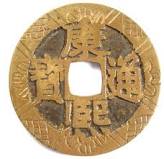
You are going to have a very inspiring Chinese lesson based on historic facts about the great and studious learner — 康熙 Kangxi, the second emperor of 清 Qīng Dynasty. You will not only learn some useful mathematical terminologies and phrases, but also be able to take a closer look at how the brilliant monarch solved his learning problem. Based on different abilities of readers, the post is arranged by the following sections:
1 Chinese text with audio
2 Chinese text with audio and pinyin
3 Annotated Chinese text with pinyin
4 Chinese text of the story with English translation and audio
5 Basic mathematical terms and their Chinese translation with audio recording
1 Chinese text with audio recording.
[audio:http://www.chinesetolearn.com/wp-content/uploads/2012/05/advanced-Chinese.mp3|titles=advanced Chinese]
学数学解方程时,我们总会碰到“元”、“次”、“根”。不过,你知道数学术语“元”、“次”、“根” 的汉语译名是谁创造的?是鼎鼎大名的康熙皇帝。
When studying math equations, we always will encounter “variables,” “degree of polynomial,” and “root.” However, do you know who created the Chinese translation of these math terms “variables,” “degree of polynomial,” and “root”? It is the famous Emperor Kangxi.
Emperor Kangxi was a studious monarch. He formally became an apprentice to Father Ferdinand Verbiest and other missionaries and studied astronomy, math and also learned Latin language. Kangxi’s cleverness and smartness were well above other people, however listen to the foreign teachers’ lecture was not easy, for Ferdinand Verbiest and others’ Chinese capacity is limited. Their daily conversation was not bad, but it was not that easy to express and present profound scientific knowledge.
However, the Kangxi Emperor learned very seriously, and also was very patient. If he did not understand at the first listening, he then asked the teacher to explain it again, until he truly understood. When Ferdinand Verbiest explained equations, the sentences he used were tedious long and his pronunciation was not clear, Emperor Kangxi often got frantically confused.
He thought and thought, “How can I do to make the teacher explain math more easily for me to understand?” He thought and came up a good method. He suggested Ferdinand Verbiest to translate variables as “yuán”, the highest degree of polynomial as “cì”, and translate the value of the unknown number, which equates the left side and right side of equation as ” gēn ” or ” jiě.”
His teacher, Ferdinand Verbiest, took out a pen and carefully wrote these down, then used these newly created terms to replace those phrases he originally used: To find the root of the equation in one variable. In this way, as expectedly, Kangxi increased greatly on learning efficiency. Ferdinand Verbiest looked at Kangxi amazedly, and suddenly tightly embraced him and said: ” I have been reading and teaching for decades. Regardless of whether teachers and students, I have never seen one like you so willing to use their brains!” Emperor Kangxi’s creation of these mathematical terms is very easy to understand and remember; it is still being used till today.
5 Basic mathematical terms and their Chinese translation / How to say math terms in Mandarin Chinese
[audio:http://www.chinesetolearn.com/wp-content/uploads/2012/05/advanced-Chinese3.mp3|titles=advanced Chinese]
absolute value 绝对值 juéduì zhí
acute-angled triangle 锐角三角形 ruì jiǎo sānjiǎoxíng
addition formula 加法公式 jiāfǎ gōngshì
algebraic equation 代数方程 dàishù fāngchéng
algebraic operation 代数运算 dàishù yùnsuàn
angle of intersection 相交角;交角 xiāngjiāo jiǎo ;jiāo jiǎo
angle sum of a triangle 三角形内角和 sānjiǎoxíng nèi jiǎo hé
anti-clockwise direction 逆时针方向;返时针方向 nì shí zhēn fāngxiàng ;fǎn shí zhēn fāngxiàng
[audio:http://www.chinesetolearn.com/wp-content/uploads/2012/05/advanced-Chinese4.mp3|titles=advanced Chinese]
Arabic system 阿拉伯数字系统 ālābóshùzì xìtǒng
arc length 弧长 hú cháng
arithmetic 算术 suànshù
array 数组; 数组 shùzǔ; shùzǔ
assumption 假定;假设 jiǎdìng ;jiǎshè
axis 轴 zhóu
binary operation 二元运算 èr yuán yùnsuàn
binomial theorem 二项式定理 èrxiàngshì dìnglǐ
bisector 等分线 ;平分线 děngfēnxiàn ;píngfēn xiàn
calculator 计算器;计算 Jìsuànqì ;jìsuàn
calculus 微积分学 wēijīfēnxué
centripedal force force 向心力 xiàng xīn lì
chart 图;图表 tú ;túbiǎo
clockwise direction 顺时针方向 shùnshízhēnfāngxiàng
combination 组合 zǔhé
common denominator 同分母;公分母 tóng fēnmǔ ;gōngfēn mǔ
common factor 公因子 gōng yīnzǐ
[audio:http://www.chinesetolearn.com/wp-content/uploads/2012/05/advanced-Chinese5.mp3|titles=advanced Chinese]
compasses 圆规 yuánguī
computation 计算 jìsuàn
congruent triangles 全等三角形 quán děng sānjiǎoxíng
corresponding sides 对应边 duìyìng biān
counter clockwise direction 逆时针方向;返时针方向 nì shí zhēn fāngxiàng ;fǎn shí zhēn fāngxiàng
cube root 立方根 lìfānggēn
cylinder 柱;圆柱体 yuánzhù tǐ
equal 相等 xiāngděng
equation in one unknown 一元方程 yīyuánfāngchéng
equation in two unknowns
(variables) 二元方程 èr yuán fāngchéng
equilateral triangle 等边三角形 děng biān sānjiǎoxíng
expression 式;数式 shì ;shǔ shì
fraction 分数 fēnshù
geometry 几何;几何学 jǐhé ;jǐhéxué
Hindu-Arabic numeral 阿拉伯数字 ālābóshùzì
infinitely many 无穷多 wúqióng duō
Math terms are endless! Let’s stop at infinitely many 🙂
康熙王朝经典片段-痛斥贪官 (Historic drama show) Kangxiwangzhao (Kangxi Dynasty) classic clips – denounced the corrupt officials