
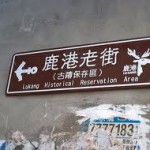
罗大佑 Luo da you 鹿港小镇 Lu gang xiao zhen Small Town of Lu Gang: lyrics, pinyin, English translation. Quotes about changes and a Chinese song called 永遠 yong yuan Forever by 孫燕姿 Sun Yanzi

images

羅大佑 – 鹿港小鎮
鹿港小镇
Lu gang xiao zhen
Small Town of Lu Gang

(note: Lukang is a small town in Changhua county 彰化縣|彰化县, Taiwan)

罗大佑
Luo da you
Lo Ta-yu

假如你先生来自鹿港小镇 请问你是否看见我的爹娘
jia3 ru2 ni3 xian1 sheng1 lai2 zi4 lu4 gang3 xiao3 zhen4, qing3 wen4 ni3 shi4 fou3 kan4 jian4 wo3 de5 die1 niang2
If you, sir, come from the small town of Lu Gang, may I ask you whether or not you have seen my father and mother?

我家就住在妈祖庙的后面 卖着香火的那家小杂货店
wo3 jia1 jiu4 zhu4 zai4 ma1 zu3 miao4 de5 hou4 mian4, mai4 zhe5 xiang1 huo3 de5 na4 jia1 xiao3 za2 huo4 dian4
My house, at the back of the Matsu Temple, is that small grocery store which sells burning joss sticks.

(note: 妈祖, name of a sea goddess still widely worshiped on the SE China coast and in SE Asia.)

假如你先生来自鹿港小镇 请问你是否看见我的爱人
jia3 ru2 ni3 xian1 sheng1 lai2 zi4 lu4 gang3 xiao3 zhen4, qing3 wen4 ni3 shi4 fou3 kan4 jian4 wo3 de5 ai4 ren2
If you sir, come from the small town of Lu Gang, may I ask whether or not you saw my lover?

想当年我离家时她已十八 有一颗善良的心和一卷长发
xiang3 dang1 nian2 wo3 li2 jia1 shi2 ta1 yi3 shi2 ba1, you3 yi4 ke1 shan4 liang2 de5 xin1 he2 yi4 juan3 chang2 fa3
Thinking of that year when I left home, she was already 18 and had a kind heart and long curly hair.

台北不是我的家 我的家乡没有霓虹灯
tai2 bei3 bu2 shi4 wo3 de5 jia1, wo3 de5 jia1 xiang1 mei2 you3 ni2 hong2 deng1
Taipei is not my home. My hometown has no neon lights.

鹿港的街道 鹿港的渔村 妈祖庙里烧香的人们
lu4 gang3 de5 jie1 dao4, lu4 gang3 de5 yu2 cun1, ma3 zu3 miao4 li3 shao1 xiang1 de5 ren2 men5
Lu Gang’s streets, Lu Gang’s fishing villages, and the people who are burning incense in the Matsu Temple.

台北不是我的家 我的家乡没有霓虹灯
tai2 bei3 bu2 shi4 wo3 de5 jia1, wo3 de5 jia1 xiang1 mei2 you3 ni2 hong1 deng1
Taipei is not my home. My hometown has no neon lights.

鹿港的清晨 鹿港的黄昏 徘徊在文明里的人们
lu4 gang3 de5 qing1 chen2, lu4 gang3 de5 huang2 hun1, pai2 huai2 zai4 wen2 ming2 li3 de5 ren2 men5
Lu Gang’s early morning, Lu Gang’s evening, and the people who are pacing back and forth in the civilization.

Music

假如你先生回到鹿港小镇 请问你是否告诉我的爹娘
jia3 ru2 ni3 xian1 sheng1 hui2 dao4 lu4 gang3 xiao3 zhen4, qing3 wen4 ni3 shi4 fou3 gao4 su4 wo3 de5 die1 niang2
If you sir had returned to Lu Gang small town, may I ask whether or not you told my father and mother.

台北不是我想象的黄金天堂 都市里没有当初我的梦想
tai2 bei3 bu2 shi4 wo3 xiang3 xiang4 de5 huang2 jin1 tian1 tang2, du1 shi4 li3 mei2 you3 dang1 chu1 wo3 de5 meng4 xiang3
Taipei is not the golden heaven of my imagination. In (this) city, there is no my original dream.

在梦里我再度回到鹿港小镇 庙里膜拜的人们依然虔诚
zai4 meng4 li3 wo3 zai4 du4 hui2 dao4 lu4 gang3 xiao3 zhen4, miao4 li3 mo2 bai4 de5 ren2 men5 yi1 ran2 qian1 cheng2
In the dream I again returned to Lu Gang little town. The people who were worshiping in the temples are still pious.

岁月掩不住爹娘淳朴的笑容 梦中的姑娘依然长发盈空
sui4 yue4 yan3 bu2 zhu4 die1 niang2 chun2 pu2 de5 xiao4 rong2, meng4 zhong1 de5 gu1 niang1 yi1 ran2 chang2 fa3 ying2 kong1
Time can’t hide father and mother’s simple and honest smiling faces. In the dream, the girl still had long hair flying in the air.

台北不是我的家 我的家乡没有霓虹灯
tai2 bei3 bu2 shi4 wo3 de5 jia1, wo3 de5 jia1 xiang1 mei2 you3 ni2 hong2 deng1
Taipei is not my home. My hometown has no neon lights.

鹿港的街道 鹿港的渔村 妈祖庙里烧香的人们
lu4 gang3 de5 jie1 dao4, lu4 gang3 de5 yu2 cun1, ma3 zu3 miao4 li3 shao1 xiang1 de5 ren2 men5
Lu Gang’s streets, Lu Gang’s fishing villages, and the people who are burning incense in the Matsu Temple.

台北不是我的家 我的家乡没有霓虹灯
tai2 bei3 bu2 shi4 wo3 de5 jia1, wo3 de5 jia1 xiang1 mei2 you3 ni2 hong1 deng1
Taipei is not my home. My hometown has no neon lights.

鹿港的清晨 鹿港的黄昏 徘徊在文明里的人们
lu4 gang3 de5 qing1 chen2, lu4 gang3 de5 huang2 hun1, pai2 huai2 zai4 wen2 ming2 li3 de5 ren2 men5
Lu Gang’s early morning, Lu Gang’s evening, and the people who are pacing back and forth in the civilization.

再度我唱起这首歌 我的歌中和有风雨声
zai4 du4 wo3 chang4 qi3 zhe4 shou3 ge1, wo3 de5 ge1 zhong1 he2 you3 feng1 yu3 sheng1
Again I sing up this song — in my song ( it is) mixed with sounds of wind and rain.

归不得的家园 鹿港的小镇 当年离家的年轻人
gui1 bu4 de2 de5 jia1 yuan2, lu4 gang3 de5 xiao3 zhen4, dang1 nian2 li2 jia1 de5 nian2 qing1 ren2
The homeland that I can’t return to — the small town of Lu Gang. The young person who left home that year.

台北不是我的家 我的家乡没有霓虹灯
tai2 bei3 bu2 shi4 wo3 de5 jia1, wo3 de5 jia1 xiang1 mei2 you3 ni2 hong2 deng1
Taipei is not my home. My home has no neon lights.

繁荣的都市 过渡的小镇 徘徊在文明里的人们
fan2 rong2 de5 du1 shi4, guo4 du4 de5 xiao3 zhen4, pai2 huai2 zai4 wen2 ming2 li3 de5 ren2 men5
Prosperous cities, transitioning small towns, and the people who pace back and forth in civilization.

o……….

听说他们挖走了家乡的红砖砌上了水泥墙
ting1 shuo1 ta1 men5 wa1 zou3 liao5 jia1 xiang1 de5 hong2 zhuan1, qi1 shang4 liao5 shui3 ni2 qiang2
(I) heard that they removed hometown’s red bricks and built up concrete walls.

家乡的人们得到他们想要的却又失去他们拥有的
jia1 xiang1 de5 ren2 men5 de2 dao4 ta1 men5 xiang3 yao4 de5, que4 you4 shi1 qu4 ta1 men5 yong3 you3 de5
The people in hometown got what they wanted, however, they lost what they owned.

门上的一块斑驳的木板刻着这么几句话
men2 shang4 de5 yi2 kuai4 ban1 bo2 de5 mu4 ban3, ke1 zhe5 zhe4 me5 ji3 ju4 hua4
On the door, there is a mottled wooden plank engraving with these words —

子子孙孙永保佑 世世代代传香火 啊—-鹿港的小镇
zi3 zi3 sun1 sun1 yong3 bao3 you4, shi4 shi4 dai4 dai4 chuan2 xiang1 huo3, a —- lu4 gang3 de5 xiao3 zhen4
Forever bless and protect posterity, every generation passes on burning joss sticks . Ah, the small town of Lu Gang.

Translated by Shu

Quotes about changes:

“Never doubt that a small group of thoughtful, committed, citizens can change the world. Indeed, it is the only thing that ever has.”
― Margaret Mead

“Things change. And friends leave. Life doesn’t stop for anybody.”
― Stephen Chbosky, The Perks of Being a Wallflower

“Everyone thinks of changing the world, but no one thinks of changing himself.”
― Leo Tolstoy

“The world as we have created it is a process of our thinking. It cannot be changed without changing our thinking.”
― Albert Einstein

“Grief does not change you, Hazel. It reveals you.”
― John Green, The Fault in Our Stars

“They always say time changes things, but you actually have to change them yourself.”
― Andy Warhol, The Philosophy of Andy Warhol

“Why do you go away? So that you can come back. So that you can see the place you came from with new eyes and extra colors. And the people there see you differently, too. Coming back to where you started is not the same as never leaving.”
― Terry Pratchett, A Hat Full of Sky

“For what it’s worth: it’s never too late or, in my case, too early to be whoever you want to be. There’s no time limit, stop whenever you want. You can change or stay the same, there are no rules to this thing. We can make the best or the worst of it. I hope you make the best of it. And I hope you see things that startle you. I hope you feel things you never felt before. I hope you meet people with a different point of view. I hope you live a life you’re proud of. If you find that you’re not, I hope you have the courage to start all over again.”
― Eric Roth, The Curious Case of Benjamin Button screenplay

“Love can change a person the way a parent can change a baby- awkwardly, and often with a great deal of mess.”
― Lemony Snicket, Horseradish: Bitter Truths You Can’t Avoid

“We are taught you must blame your father, your sisters, your brothers, the school, the teachers – but never blame yourself. It’s never your fault. But it’s always your fault, because if you wanted to change you’re the one who has got to change.”
― Katharine Hepburn, Me: Stories of My Life

“If people refuse to look at you in a new light and they can only see you for what you were, only see you for the mistakes you’ve made, if they don’t realize that you are not your mistakes, then they have to go.”
― Steve Maraboli, Life, the Truth, and Being Free

“Stepping onto a brand-new path is difficult, but not more difficult than remaining in a situation, which is not nurturing to the whole woman.”
― Maya Angelou

“Life is a series of natural and spontaneous changes. Don’t resist them; that only creates sorrow. Let reality be reality. Let things flow naturally forward in whatever way they like.”
― Lao Tzu

“I alone cannot change the world, but I can cast a stone across the waters to create many ripples.”
― Mother Teresa

“Those who cannot change their minds cannot change anything.”
― George Bernard Shaw

“You’re always you, and that don’t change, and you’re always changing, and there’s nothing you can do about it.”
― Neil Gaiman, The Graveyard Book

“Destiny is not a matter of chance; it is a matter of choice. It is not a thing to be waited for, it is a thing to be achieved.”
― William Jennings Bryan

“Fashion changes, but style endures.”
― Coco Chanel

“I cut an inch off of every straw I see, just to make the world suck a little less.
”
― Jarod Kintz, This Book Has No Title

These good quotes come from
http://www.goodreads.com/quotes/tag/change?page=2

To the opposite of change or changes, there is a song called forever 永遠 yong yuan
孫燕姿-永遠

I have never heard of this song before, but I am going to give it a listen! Hope, by chance, you will like it or at least practice your Chinese reading comprehension skill on the lyrics of the song.
Posted in Chinese songs, Quotes | Tagged , , , , , , , , | Comments Off on 罗大佑 Luo da you 鹿港小镇 Lu gang xiao zhen Small Town of Lu Gang: lyrics, pinyin, English translation. Quotes about changes and a Chinese song called 永遠 yong yuan Forever by 孫燕姿 Sun Yanzi

Modern China’s most prominent and influential writer, Lu Xun: His life, literary works and quotes with Chinese text, pinyin, English translation and audio recording. Full length movie of the true story of Ah Q

images

鲁迅名言警句
Lǔ Xùn míngyán jǐngjù
Lu Xun’s famous quotes (sayings) and aphorisms

[ca_audio url=”http://www.chinesetolearn.com/wp-content/uploads/2013/01/Lu-Xun.mp3″ width=”500″ height=”27″ css_class=”codeart-google-mp3-player” autoplay=”false”]

1、时间就像海绵里的水,只要愿挤,总还是有的。
shíjiān jiù xiàng hǎimián lǐ de shuǐ , zhǐyào yuàn jǐ , zǒng hái shì yǒu de .
Time is like the water in a sponge; as long as you are willing to squeeze it, it always will have some (come out).

2、有存在,便有希望,有希望,便是光明。
yǒu cúnzài , biàn yǒuxīwàng , yǒuxīwàng , biàn shì guāngmíng .
When there is an existence, there is a hope; when there is a hope, there will be bright.

3、悲剧将人生的有价值的东西毁灭给人看,喜剧将那无价值的撕破给人看。
bēijù jiāng rénshēng de yǒu jiàzhí de dōngxi huǐmiè gěi rén kàn , xǐjù jiāng nà wú jiàzhí de sīpò gěi rén kàn .
Tragedies show people by destructing the valuable things of life while comedies by tearing those worthless things.

4、伟大的心胸,应该表现出这样的气概——用笑脸来迎接悲惨的厄运,用百倍的勇气来应付一切的不幸。
wěidà de xīnxiōng , yīnggāi biǎoxiàn chū zhèyàng de qìgài ——yòng xiàoliǎn lái yíngjiē bēicǎn de èyùn, yòng bǎibèi de yǒngqì lái yìngfu yīqiè de bùxìng .
(A person who has) great mind, should demonstrate this kind of spirit – greeting tragic misfortune with a smiling face, and coping with all the misfortunes with the hundredfold courage.

5、不满足是向上的齿轮。
bù mǎnzú shì xiàngshàng de chǐlūn .
Discontent is the gear wheel that moves people upward.

6、渡尽劫波兄弟在,相逢一笑泯恩仇。
dù jǐn jié bō xiōngdi zài , xiāngféng yī xiào mǐn ēn chóu .
Passed through kalpa waves ( here refers to fated misfortune events), brothers remain; met by chances and smiled, debt of gratitude and animosity all vanish.
(Kalpa in Hindu cosmology refers to a period in which the universe experiences a cycle of creation and destruction.)

7、只看一个人的着作,结果是不大好的:你就得不到多方面的优点。必须如蜜蜂一样,采过许多花,这才能酿出蜜来。倘若叮在一处,所得就非常有限,枯燥了。
zhǐ kàn yī ge rén de zhùzuò , jiéguǒ shì bù dà hǎo de : nǐ jiù dé bù dào duō fāng miàn de yōudiǎn . bìxū rú mìfēng yīyàng , cǎiguò xǔduō huā , zhè cáinéng niàng chū mì lái . tǎngruò dīng zài yī chù , suǒ dé jiù fēicháng yǒuxiàn , kūzào le .
If a reader only read a person’s work, then the result won’t be too good; you won’t obtain advantages of many sides. Readers must be like bees — gathering nectar from many flowers then they will be able to make honey. If a bee only stings on one spot, then what the bee gets will be very limited and boring.

8、游戏是儿童最正当的行为,玩具是儿童的天使。
yóuxì shì értóng zuì zhèngdāng de xíngwéi , wánjù shì értóng de tiānshǐ .
Playing games is the most proper behavior of a child; toys are the angels of children.

9、真正的勇士,敢于直面惨淡的人生,敢于正视淋漓的鲜血。
zhēn zhèng de yǒngshì , gǎn yú zhí miàn cǎndàn de rénshēng , gǎn yú zhèng shì lín lí de xiānxuè.
True warriors have the courage to face gloomy life squarely and dare to watch dripping blood directly.

10、改造自己,总比禁止别人来得难。
gǎizào zìjǐ , zǒng bǐ jìnzhǐ biérén lái děi nán .
To transform ourselves is more difficult than to prohibit others.

11、单是说不行,要紧的是做。
dān shì shuō bù xíng , yàojǐn de shì zuò .
Just saying is not O.K.; the most important thing is to do.

12、友谊是两颗心的真诚相待,而不是一颗心对另一颗心的敲打。
yǒuyì shì liǎng kē xīn de zhēnchéng xiāng dāi, ér bu shì yī kē xīn duì lìng yī kē xīn de qiāo dǎ.
Friendship is two hearts that mutually treat each other sincerely, rather than one heart knocks and beats the other heart.

13、以人为鉴,明白非常,是使人能够反省的妙法。
yǐ rén wèi jiàn , míngbai fēicháng , shì shǐ rén nénggòu fǎnxǐng de miào fǎ .
Using a person as a mirror will make one understand unusual matters. It is a wonderful way to let him or her be able to examine his or her conscience.

14、倘只看书,便变成书橱。
táng zhǐ kànshū , biàn biànchéng shū chú .
If one only reads books (without thinking and applying the content into life), then one will become a bookshelf.

15、其实地上本没有路,走的人多了,便成了路。
qíshí dì shàng běn méi yǒu lù , zǒu de rén duō le , biàn chéng le lù .
In fact, on the earth there were no roads, however, more and more people walked on it, then roads were created.

16、哪里有天才,我只是把别人喝咖啡的工夫都用在了工作上了。
nǎlǐ yǒu tiāncái , Wǒ zhǐ shì bǎ bié rén hē kāfēi de gōngfu dōu yòng zài le gōngzuò shàng le .
Where is a genius? (It means there is no naturally born genius.) I just put all my effort on work while others use theirs on drinking coffee.

17、愈艰难,就愈要做。改革,是向来没有一帆风顺的。
yù jiānnán , jiù yùe yào zuò . gǎigé , shì xiànglái méiyǒu yī fán fēng shùn de .
The more difficult it is, the more necessary it needs to be done. Reform has never been a smooth sailing thing.
(一帆风顺 yi fan feng shun is an idiom which means propitious wind throughout the journey / have a nice trip / plain sailing. )

18、假使做事要面面顾到,那就什么事都不能做了。
jiǎshǐ zuòshì yào miàn miàn gù dào , nà jiù shénme shì dōu bù néng zuòle.
If you have to take care of every aspects of a thing, then you won’t be able to do anything.

19、做一件事,无论大小,倘无恒心,是很不好的。
zuò yī jiàn shì , wúlùn dàxiǎo , táng wú héng xīn , shì hěn bù hǎo de .
Doing a thing, no matter it is big or small, if you don’t have persistence, then it is not good.

20、死者倘不埋在活人心中,那就真真死掉了。
sǐzhě táng bù máizài huó rénxīn zhōng , nà jiù zhēnzhēn sǐ diàole.
If the dead is not buried in the hearts of living people, then he or she truly, truly did die.

21、只要能培一朵花,就不妨做做会朽的腐草。
zhǐyào néng péi yī duǒ huā , jiù bùfáng zuòzuo huì xiǔ de fǔ cǎo .
As long as you will be able to cultivate a flower, it is O.K. (to sacrifice yourself) to be a rottenable decaying grass.

22、当我沉默的时候,我觉得充实;我将开口,同时感到空虚。
dàng wǒ chén mò de shíhou , Wǒ juéde chōngshí ;Wǒ jiāng kāi kǒu , tóngshí gǎndào kōngxū .
When I was silent, I felt very full and substantial; when I am able to open mouth, at the same time, I feel empty.

23、待我成尘时,你将见我的微笑!
dāi wǒ chéng chén shí , nǐ jiāng jiàn Wǒ de wēixiào !
When I become ashes, you will see my smiles!

24、不在沉默中爆发,就在沉默中灭亡。
bù zài chén mò zhōng bàofā , jiù zài chén mò zhōng mièwáng .
If not explode in silence, then will be extinguished in silence.

25、使一个人的有限的生命,更加有效,也即等于延长了人的生命。
shǐ yī ge rén de yǒuxiàn de shēngmìng , gèngjiā yǒu xiào , yě jí děngyú yáncháng le rén de shēngmìng .
To make a person’s limited life become more effective is equal to extend a person’s life.

26、走上人生的路途吧。前途很远,也很暗。然而不要怕,不怕的人面前才有路。
zǒu shàng rénshēng de lùtúba . qiántú hěn yuǎn , yě hěn àn . ránér bùyào pà , bùpà de rén miàn qián cái yǒu lù .
Embark onto the road of life. The future is very far as well as very dark. However, do not be afraid; there are roads, only, in front of those who don’t fear.

27、人生最苦痛的是梦醒了无路可走。
rénshēng zuì kǔtòng de shì mèng xǐng le wú lù kě zǒu .
The most miserable pain in life is after the dream got woken and found out there is no road to walk upon.

Translated by Shu

Modern China’s most prominent and influential writer, Lu Xun:
His life and his literary works

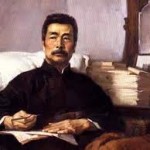
鲁迅 Lu Xun ( Zhou Shuren / 周樹人 /周树人; September 25, 1881 – October 19, 1936) was one of the major Chinese writers of the 20th century. For many, Lu Xun is considered as the leading figure of modern Chinese literature and the greatest modern writer of the 20th century. He wrote his works in baihua (白話) (written vernacular Chinese) as well as classical Chinese. Lu Xun was not only a novelist, but also an editor, translator, critic, essayist as well as a poet.

Lu was born and grew up in Shaoxing 紹興, Zhejiang, and he also came from a family with a strong Confucian background. His grandfather, Zhou Fuqing 周福清 held posts in the Hanlin Academy (翰林院), and his father was also a scholar. Lu Xun’s mother, Lu Rui 魯瑞, was a country woman who taught herself to read. Lu was mainly raised by an elderly servant Ah Chang 阿長, whom he called Chang Ma; according to one of Lu’s reminiscences, Ah chang was a very superstitious woman.

Lu Xun had a difficult childhood. The overall environment was harsh for living, he endured the Sino-Japanese War as well as the Boxer Rebellion (an anti-foreign, proto-nationalist movement by the Righteous Harmony Society in China between 1898 and 1901). The living in his family was challenging too — his father suffered from chronic illness (tuberculosis), and his family had to pawn their belongings to buy medicine for him. When Lu Xun was thirteen, his grandfather in Peking was accused of complicity in a bribery case — in which Zhou Fuqing tried to procure an office for his son, Lu Xun’s father, Zhou Boyi 周伯宜; the scheme got exposed and Zhou Fuqing was arrested for seven years and every fall of these years his family had to send money to the Ministry of Punishment to insure that his grandfather would not be sentenced to death. This misfortune probably triggered Lu Xun’s contempt toward traditional Chinese governmental system.

His father’s chronic illness and eventual death due to tuberculosis gave Lu Xun the motive to study medicine. Later, he became distrusted in traditional Chinese medicine and in 1904 he went abroad to pursue a Western medical degree at Sendai Medical Academy (the present medical school of Tohoku University) in Sendai, Japan; Lu Xun gained a minor reputation there as the first foreign student of the college.

Later, Lu Xun gave up completing of his medical education at Sendai. According to the well-known preface to Nahan (吶喊 / Call to Arms), his first story collection, he mentioned that one day after class, one of his Japanese instructors screened a lantern slide documenting the imminent execution of an alleged Chinese spy during the Russo-Japanese War (1904-05). Lu Xun was appalled by the complete apathy of the Chinese onlookers, thus, he decided it was more important to cure his compatriots’ spiritual ills rather their physical diseases.

Encouraged by his fellow friends, years later, Lu Xun accepted some teaching positions at the Peking University and Peking Women’s Teachers College and began his great writing career.

In May 1918, He used Lu Xu 鲁迅 as his pen name for the first time and published his first major baihua short story, Kuangren Riji (狂人日記, A Madman’s Diary). He chose the surname Lu 鲁 for it was his mother’s maiden family name. Partly inspired by Gogol’s short story (Nikolai Gogol, an Ukrainian-born Russian dramatist, novelist and short story writer, 1809-1852), Kuangren Riji is considered to be one of the first and most influential modern works written in vernacular Chinese (baihua). In the story, Lu Xun describes and criticizes the effects of outdated Chinese traditions and Confucian feudalism upon the Chinese people. He uses an analogy of cannibalism to metaphorically imply the way such outdated values ‘gnawing’ at the Chinese individual like cannibalism (Cannibalism – from Caníbales, the Spanish name for the Carib people, a West Indies tribe formerly well known for their practice of cannibalism – is the act or practice of humans eating the flesh or internal organs of other human beings). The publishing of the book, right away established Lu Xun as one of the most influential leading writers of his days.

The True Story of Ah Q (A Q Zhengzhuan, 阿Q正传) which was published in the 1921 became Lu Xun’s most famous work. The True Story of Ah Q describes Ah Q’s life adventures, a man from the rural peasant class with little education and no clear occupation. Even when he faced with extreme defeat or humiliation, Ah Q is still full of his own spiritual victories. Ah Q is a bully to those are less fortunate than himself, but he fears those who are above him in rank, strength, or power. Nonetheless, Ah Q always persuades himself mentally that he is spiritually superior to his oppressors even at the times when he succumbs to their tyranny and suppression. Lu Xun exposes Ah Q’s extreme faults as a symptomatic Chinese national character of that period of time. The story ends with the poignant and satirical scene — Ah Q is carted off to execution for a minor crime.

Lu Xun’s writing style could be described wry and ironic. Through vivid analogies and exaggerated characters, Lu Xun employed sensitive descriptions about the sufferings of the Chinese people at that period and conveyed his personal vision of Chinese society. The intensity and darkness of this vision sometimes makes reading Lu Xun’s stories a disturbing experience.

Beside novels and essays, in 1930 Lu Xun published a comprehensive overview of Chinese fiction up till his time — Zhongguo Xiaoshuo Lueshi (中国小说史略, A Concise History of Chinese Fiction). The material he used was drawn from Lu Xun’s own lectures at Peking University and this book became one of the landmark books of Chinese literary criticism in the twentieth-century.

Lu Xun’s works were highly acclaimed by the Communist regime after 1949. Even 毛泽东 Mao Zedong (the founding father of the People’s Republic of China; December 26, 1893 – September 9, 1976) admired Lu Xun’s works; Lu Xun, hailed as “commander of China’s cultural revolution” by Mao Zedong, is typically regarded as the most influential Chinese writer who was associated with the May Fourth Movement (五四运动 Wu si Yun dong; an anti-imperialist, cultural, and political movement growing out of student demonstrations in Beijing on May 4, 1919). In the 1930s Lu was regarded as the titular head of the Chinese League of the Left-Wing Writers, however, Lu Xun never actually joined the Chinese Communist Party. Like many leaders of the May Fourth Movement, he was primarily a liberal.

Sadly, like father like son, in 1936 Lu Xun died of tuberculosis. He was survived by a son.

If you are interested in this famous Chinese writer Lu Xun, and would like to learn more about him, then you can read another good article about him with detailed biography and background info:
Lu Xun Biography By Kirk A. Denton at http://mclc.osu.edu/rc/bios/lxbio.htm

About the life and story of Lu Xun’s wife Xu Guangping, see
Xu Guangping – Wife of Lu Xun http://history.cultural-china.com/en/48History8779.html

Movie 阿Q正傳 The true story of Ah Q

Interview with Zhou Lingfei, famous Chinese writer Lu Xun’s grandson

Posted in Chinese culture, Famous Chinese authors, Important Chinese people, One Chinese sentence a day, Quotes | Tagged , , , , , , , , , , | 2 Comments