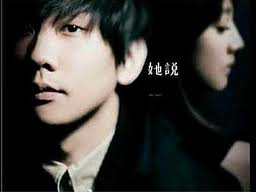
I like JJ Lin’s version better:) He also wrote the lyrics, very talented he is.
当你
Dang Ni
When you
JJ Lin
Lin Jun jie
林俊杰
如果有一天 我回到从前
ru2 guo3 you3 yi4 tian1 wo3 hui1 dao4 cong2 qian2
If there is one day I could return to the past
如果(if)有(have)一(one)天(day) 我(I)回(return)到(to)从前(before)
回到最原始的我
hui2 dao4 zui4 yuan2 shi3 de5 wo3
Return to the most original me
回(return)到(to)最(the most)原始(origin)的(particle)我(I/me)
你是否 会觉得我不错
ni3 shi4 fou3 hui4 jue2 de5 wo3 bu2 cuo4
You, whether or not, will still feel that I am not bad
你(you)是否(yes or not/whether or not) 会(will)觉得(feel)我(I)不(not)错(bad)
如果有一天 我离你遥远
ru2 guo3 you3 yi4 tian1 wo3 li2 ni3 yao2 yuan3
If there is one day, I would be so far away from you
如果(if)有(there is)一(one)天(day) 我(I)离(away from)你(you)遥远(far away)
不能再和你相约
bu4 neng2 zai4 he2 ni3 xiang1 yue1
We would not be able to agree on a date
不(not)能(able to)再(again)和(with)你(you)相(together)约(arrange to do something)
你是否会发觉 我已经说再见
ni3 shi4 fou3 hui4 fa1 jue2 wo3 yi3 jing1 shuo1 zai4 jian4
You, whether or not, would realize that I have already said goodbyes
你(you)是否(whether or not)会(will)发觉(discover/realize) 我(I)已经(already)说(say)再见(goodbye)
当你的眼睛 眯著笑
dang1 ni3 de5 yan3 jing1, mi1 zhe5 xiao4
When your eyes squinted with smiling
当(when)你的(your)眼睛(eyes) 眯(squint)著(particle after a verb)笑(smile)
当你喝可乐 当你吵
dang1 ni3 he2 ke3 le4 dang1 ni3 chao3
When you drank cola, and when you were noisy
当(when)你(you)喝(drink)可乐(cola) 当(when)你(you)吵(noisy)
我想对你好 你从来不知道
wo3 xiang3 dui4 ni3 hao3 ni3 cong2 lai2 bu4 zhi1 dao4
I wanted to be nice to you, but you never knew
我(I)想(want)对(toward)你(you)好(good) 你(you)从来(never)不(not)知道(know)
想你 想你 也能成为嗜好
xiang3 ni3 xiang3 ni3 ye3 neng2 cheng2 wei2 shi4 hao4
Missing you, missing you, and it (missing you) even has become a hobby
想(think)你(you) 想(think)你(you) 也(also)能(can)成为(become)嗜好(hobby)
当你说今天的烦恼
dang1 ni3 shuo1 jin1 tian1 de5 fan2 nao3
When you said about today’s worries and troubles
当(when)你(you)说(say)今天(today)的(particle)烦恼(troubles)
当你说夜深 你睡不着
dang1 ni3 shuo1 ye4 shen1 ni3 shui4 bu4 zhao2
When you said the night was late and you could not fall into sleep
当(when)你(you)说(say)夜(night)深(deep) 你(you)睡(sleep)不(not)着(got into something)
我想对你说 却害怕都说错
wo3 xiang3 dui4 ni3 shuo1 que4 hai4 pa4 dou1 shuo1 cuo4
I wanted to say to you, yet I was afraid that I would say them all wrong
我(I)想(want)对(to)你(you)说(say) 却(yet)害怕(fear)都(all)说(say)错(wrong)
好喜欢你 知不知道
hao3 xi3 huan1 ni3 zhi1 bu4 zhi1 dao4
I really like you; do you know or not
好(very much)喜欢(like)你(you) 知(know)不(not)知道(know)
如果有一天 梦想都实现
ru2 guo2 you3 yi4 tian1 meng4 xiang3 dou1 shi2 xian4
If there is one day, all dreams can be realized
如果(if)有(there is)一(one)天(day) 梦想(dream)都(all)实现(realize)
回忆都成了永远
hui2 yi4 dou1 cheng2 le5 yong3 yuan3
Memories all became foreverness
回忆(memory)都(all)成(become)了(past tense marker)永远(forever)
你是否还会 记得今天
ni3 shi4 fou3 hai2 hui4 ji4 de5 jin1 tian1
You, whether or not, would still remember today
你(you)是否(whether or not)还(still)会(will) 记得(remember)今天(today)
如果有一天 我们都发觉
ru2 guo3 you3 yi4 tian1 wo3 men1 dou1 fa1 jue2
If there is one day, we all would be aware that
如果(if)有(have)一(one)天(day) 我们(we)都(all)发觉(realize)
原来什么都可以
yuan2 lai2 shen2 me5 dou1 ke3 yi3
As it turns out, anything would be all possible
原来(as it turns out)什么(no matter what)都(all)可以(OK)
我们是否还会 停留在这里
wo3 men1 shi4 fou3 huan2 hui4 ting2 liu2 zai4 zhe4 li3
We, whether or not, will still stay here
我们(we)是否(whether or not)还(still)会(will) 停留(stop and linger)在(at)这里(here)
Chorus
当你的眼睛 眯著笑
dang1 ni3 de5 yan3 jing1, mi1 zhe5 xiao4
When your eyes squinted with smiling
当你喝可乐 当你吵
dang1 ni3 he2 ke3 le4 dang1 ni3 chao3
When you drank cola, and when you were noisy
我想对你好 你从来不知道
wo3 xiang3 dui4 ni3 hao3 ni3 cong2 lai2 bu4 zhi1 dao4
I wanted to be nice to you, but you never knew
想你 想你 也能成为嗜好
xiang3 ni3 xiang3 ni3 ye3 neng2 cheng2 wei2 shi4 hao4
Missing you, missing you, and it (missing you) even has become a hobby
当你说今天的烦恼
dang1 ni3 shuo1 jin1 tian1 de5 fan2 nao3
When you said about today’s worries and troubles
当你说夜深 你睡不着
dang1 ni3 shuo1 ye4 shen1 ni3 shui4 bu4 zhao2
When you said the night was late and you could not fall into sleep
我想对你说 却害怕都说错
wo3 xiang3 dui4 ni3 shuo1 que4 hai4 pa4 dou1 shuo1 cuo4
I wanted to say to you, yet I was afraid that I would say them all wrong
好喜欢你 知不知道
hao3 xi3 huan1 ni3 zhi1 bu4 zhi1 dao4
I really like you; do you know or not
也许空虚 让我想得太多
ye3 xu3 kong1 xu1 rang4 wo3 xiang2 de5 tai4 duo1
Perhaps it is the emptiness made me thought too much
也许(perhaps)空虚(empty) 让(let)我(me)想(think)得(particle)太(too)多(many)
也许该回到被窝
ye3 xu3 gai1 hui2 dao4 bei4 wo1
Perhaps, I should return to the sleeping pad
也许(perhaps)该(should)回(return)到(to)被(quilt/comforter)窝(nest)
梦里会相遇 就毫不犹豫
meng4 li3 hui4 xiang1 yu4 jiu4 hao2 bu4 you2 yu4
In the dreams I will see you, then I will not hesitate
梦(dream)里(within)会(will)相(each other)遇(meet) 就(then)毫(a bit)不(not)犹豫(hesitate)
大声的说我要说
da4 sheng1 de5 shuo1 wo3 yao4 shuo1
Loudly, I want to say …..
大(big)声(sound)的(connecting particle)说(say)我(I)要(want)说(say)
Repeat chorus
Translated by Shu
Be yourself quotes:
To be nobody but yourself in a world which is doing its best, night and day, to make you everybody else means to fight the hardest battle which any human being can fight; and never stop fighting. ~e.e. cummings, 1955
He who trims himself to suit everyone will soon whittle himself away. ~Raymond Hull
God has given you one face, and you make yourself another. ~William Shakespeare
All my life I had been looking for something, and everywhere I turned someone tried to tell me what it was. I accepted their answers too, though they were often in contradiction and even self-contradictory. I was naïve. I was looking for myself and asking everyone except myself questions which I, and only I, could answer. It took me a long time and much painful boomeranging of my expectations to achieve a realization everyone else appears to have been born with: that I am nobody but myself. ~Ralph Ellison, “Battle Royal”
The life of every man is a diary in which he means to write one story, and writes another. ~James Matthew Barrie
Most people are other people. Their thoughts are someone else’s opinions, their lives a mimicry, their passions a quotation. ~Oscar Wilde, De Profundis, 1905
Always be a first-rate version of yourself, instead of a second-rate version of somebody else. ~Judy Garland
We are so accustomed to disguise ourselves to others that in the end we become disguised to ourselves. ~François Duc de La Rochefoucauld
If you cannot be a poet, be the poem. ~David Carradine
A man who is “of sound mind” is one who keeps the inner madman under lock and key. ~Paul Valéry, Mauvaises pensées et autres, 1942
I am told to just be myself, but as much as I have practiced the impression, I am still no good at it. ~Robert Brault, www.robertbrault.com
The great majority of us are required to live a life of constant duplicity. Your health is bound to be affected if, day after day, you say the opposite of what you feel, if you grovel before what you dislike, and rejoice at what brings you nothing but misfortune. ~Boris Pasternak
It takes courage to grow up and become who you really are. ~e.e. cummings
Almost every man wastes part of his life in attempts to display qualities which he does not possess, and to gain applause which he cannot keep. ~Samuel Johnson, The Rambler, 1750
Hateful to me as the gates of Hades is that man who hides one thing in his heart and speaks another. ~Homer
How many cares one loses when one decides not to be something but to be someone. ~Gabrielle “Coco” Chanel
“Be yourself” is about the worst advice you can give some people. ~Tom Masson
I think of life itself now as a wonderful play that I’ve written for myself, and so my purpose is to have the utmost fun playing my part. ~Shirley MacLaine
Never be bullied into silence. Never allow yourself to be made a victim. Accept no one’s definition of your life; define yourself. ~Harvey Fierstein
Learn to… be what you are, and learn to resign with a good grace all that you are not. ~Henri Frederic Amiel
I am much better employed from every point of view, when I live solely for my own satisfaction, than when I begin to worry about the world. The world frightens me, and a frightened man is no good for anything. ~George Gissing
No man can climb out beyond the limitations of his own character. ~John Morley
There is just one life for each of us: our own. ~Euripides
Never apologize for showing feeling. When you do so, you apologize for the truth. ~Benjamin Disraeli
If God had wanted me otherwise, He would have created me otherwise. ~Johann von Goethe
Wherever you go, go with all your heart. ~Confucius
Let the world know you as you are, not as you think you should be, because sooner or later, if you are posing, you will forget the pose, and then where are you? ~Fanny Brice
These wonderful quotes come from http://www.quotegarden.com/be-self.html
Adele – Rolling in the Deep – lyrics
You might wonder why put on this song. For tonight’s Grammy Award, this song won the song of the year:) Just for the occasion.