
Classic Chinese song 野百合也有春天 Ye bai he ye you chun tian Wild lilies also have spring 潘越云 Pan yue yun, Lo Ta-yu Luo Dayou version: lyrics, pinyin, English translation, quotes of lily, lilies, tiger lily-matchbook romance

Pan yue yun Wild lilies also have spring


羅大佑 – 野百合也有春天 1989

潘越云 野百合也有春天
Ye bai he ye you chun tian
Wild lilies also have spring

潘越云
Pan yue yun

仿佛如同一场梦
fang3 fu2 ru2 tong1 yi4 chang3 meng4
It seems like a dream

我们如此短暂的相逢
wo3 men1 ru2 ci3 duan3 zan4 de5 xiang1 feng2
Our meeting by chance is so brief

你像一阵春风
ni3 xiang4 yi2 zhen4 chun1 feng1
You are like one breeze of spring wind

轻轻柔柔吹入我心中
qing1 qing1 rou2 rou2 chui1 ru4 wo3 xin1 zhong1
Lightly and tenderly blew into inside of my heart

而今何处是你往日的笑容
er2 jin1 he2 chu4 shi4 ni3 wang3 ri4 de5 xiao4 rong2
However, now, where is your former days’ smiling appearance?

记忆中那样熟悉的笑容
ji4 yi4 zhong1 na4 yang4 shu2 xi1 de5 xiao4 rong2
The smiling face that is so familiar in my memory

你可知道我爱你想你怨你念你
ni3 ke3 zhi1 dao4 wo3 ai4 ni3 xiang3 ni3 yuan4 ni3 nian4 ni3
Do you know that I love you, miss you, blame you and think of you

深情永不变
shen1 qing2 yong3 bu2 bian4
The deep affection will never change

难道你不曾回头想想
nan2 dao4 ni3 bu4 zeng2 hui2 tou2 xiang3 xiang3
Could it be that you never look back and think

昨日的誓言
zuo2 ri4 de5 shi4 yan2
Yesterday’s promise

就算你留恋开放在水中
jiu4 suan4 ni3 liu2 lian4 kai1 fang4 zai4 shui3 zhong1
Even though you linger and become infatuated with those blooming in the water

娇艳的水仙
jiao1 yan4 de5 shui3 xian1
Tender and beautiful daffodils

别忘了山谷里寂寞的角落里
bie2 wang4 liao3 shan1 gu3 li3 ji2 mo4 de5 jiao3 luo4 li3
Don’t forget that in the lonely corner of mountain valley

野百合也有春天
ye3 bai3 he2 ye3 you3 chun1 tian2
Wild lilies also have spring

仿佛如同一场梦
fang3 fu2 ru2 tong1 yi4 chang3 meng4
It seems like a dream

我们如此短暂的相逢
wo3 men1 ru2 ci3 duan3 zan4 de5 xiang1 feng2
Our meeting by chance is so brief

你像一阵春风
ni3 xiang4 yi2 zhen4 chun1 feng1
You are like one breeze of spring wind

轻轻柔柔吹入我心中
qing1 qing1 rou2 rou2 chui1 ru4 wo3 xin1 zhong1
Lightly and tenderly blew into inside of my heart

而今何处是你往日的笑容
er2 jin1 he2 chu4 shi4 ni3 wang3 ri4 de5 xiao4 rong2
However, now, where is your former days’ smiling appearance?

记忆中那样熟悉的笑容
ji4 yi4 zhong1 na4 yang4 shu2 xi1 de5 xiao4 rong2
The smiling face that is so familiar in my memory

你可知道我爱你想你怨你念你
ni3 ke3 zhi1 dao4 wo3 ai4 ni3 xiang3 ni3 yuan4 ni3 nian4 ni3
Do you know that I love you, miss you, blame you and think of you

深情永不变
shen1 qing2 yong3 bu2 bian4
The deep affection will never change

难道你不曾回头想想
nan2 dao4 ni3 bu4 zeng2 hui2 tou2 xiang3 xiang3
Could it be that you never look back and think

昨日的誓言
zuo2 ri4 de5 shi4 yan2
Yesterday’s promise

就算你留恋开放在水中
jiu4 suan4 ni3 liu2 lian4 kai1 fang4 zai4 shui3 zhong1
Even though you linger and become infatuated with those blooming in the water

娇艳的水仙
jiao1 yan4 de5 shui3 xian1
Tender and beautiful daffodils

别忘了山谷里寂寞的角落里
bie2 wang4 liao3 shan1 gu3 li3 ji2 mo4 de5 jiao3 luo4 li3
Don’t forget that in the lonely corner of mountain valley

野百合也有春天
ye3 bai3 he2 ye3 you3 chun1 tian2
Wild lilies also have spring

Translated by Shu

Quotes of lily / lilies

“If you have two loaves of bread, sell one and buy a lily”
Chinese Proverbs quotes

“The splendor of the rose and the whitness of the lily do not rob the little violet of it’s scent nor the daisy of its simple charm. If every tiny flower wanted to be a rose, spring would lose its lovliness.”
Therese of Lisieux quotes

“For she is a fair maiden, fairest lady of a house of queens. And yet I know not how I should speak of her. When I first looked on her and perceived her unhappiness, it seemed to me that I saw a white flower standing straight and proud, shapely as a lily, and yet knew that it was hard, as if wrought by elf-wrights out of steel. Or was it, maybe, a frost that had turned its sap to ice, and so it stood, bitter-sweet, still fair to see, but stricken, soon to fall and die?”
J.R.R. Tolkien quotes

“I am the rose of Sharon, and the lily of the valleys.”
Bible quotes

“But Shakespeare also says, ’tis very silly / `To gild refinèd gold, or paint the lily’.”
Lord Byron quotes

“Therefore, to be possessed with double pomp,

To guard a title that was rich before,

To gild refined gold, to paint the lily,

To throw a perfume on the violet,

To smooth the ice, or add another hue

Unto the rainbow, or with taper light

To seek the beauteous eye of heaven to garnish,

Is wasteful and ridiculous excess.”
William Shakespeare quotes

These quotes are from: http://thinkexist.com/quotes/with/keyword/lily/2.html

tiger lily-matchbook romance[with lyrics]
Posted in Chinese songs, English song, Quotes | Tagged , , , | 2 Comments

History of emoticon, eastern and western emoticons. Should men use it?Learn Mandarin Chinese, how to say ” An emoticon looks like a human face made up of letters and punctuations.” Chinese punctuation marks, Taylor swift- I heart question mark lyrics


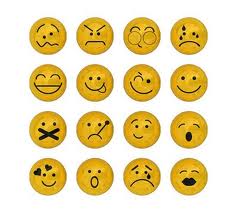
Emoticon is a combination of two words — emotion and icon– into one new word. Do you like to use emoticons in your email or text messages? If you do, you probably feel using emoticons is funny and sweet; if you don’t, then you must dislike them a lot, and call them annoying and childish? Personally, I think emoticons can bring some friendliness and warmth to the plain text and add the writing a bit human touch. However, if you put too much smileys or frown faces throughout your writing, then they would be too silly and make your writing look like a freaking emotional, sentimental piece?
[audio:http://www.chinesetolearn.com/wp-content/uploads/2012/04/listen-to16.mp3|titles=listen to]
Learn Mandarin Chinese, how to say ” An emoticon looks like a human face made up of letters and punctuations.” 网路情绪符号看起来像一张人的脸,是由字母和标点符号构成的。wǎnglù qíngxù fúhào kàn qǐlái xiàng Yī zhāng rén de liǎn , shì yóu zìmǔ hé biāodiǎn fúhào gòuchéng de . wǎnglù (网路 noun, internet) qíngxù (情绪 noun, emotion) fúhào (符号 noun, symbol, mark or sign) kàn (看 verb, look) qǐlái (看起 qǐlái originally means stand up or get up, but 看起来 kàn qǐlái here means look like or look as if) xiàng ( 像 verb, to resemble) Yī ( 一number, one) zhāng ( 张 measure word for face) rén ( 人 noun, person or people) de ( 的 particle, to connect the attributive and the noun it modifies) liǎn ( 脸 noun, face) , shì ( 是 verb, is) yóu ( 由 preposition, from) zìmǔ ( 字母 noun, letters) hé ( 和 conjunction, and) biāodiǎn ( 标点 noun, punctuation) fúhào ( 符号 noun, mark or symbol) gòuchéng ( 构成 verb, to structure) de ( 的 particle, used at the end of a declarative sentence for emphasis) .

[audio:http://www.chinesetolearn.com/wp-content/uploads/2012/04/listen-to17.mp3|titles=listen to]
An emoticon is a pictorial (绘 画 的 [huìhuà de]) representation (表 示 [biǎoshì ]) of a facial (面 部 or 脸 的 [miànbù or liǎn de]) expression (表 情 [biăoqíng] ) using punctuation (标 点 [biāodiăn] ) marks (记 号 [jìhao] ) and letters ( 字 母 [zìmŭ] ), and it is usually used in casual or humorous (有 幽 默 感 的 [yǒu yōumògǎn de ]) writing (写 作 [xiězuò ]) to express ( 表 达 [biăodá] )a person’s mood ( 心 情 [xīnqíng] ).

The first person has documented emoticon usage was Scott Fahlman, a computer scientist at Carnegie Mellon University. Fahlman first typed a colon (冒 号 [màohào] ), hyphen (连 字 符 号 [liánzìfúhào ]) and bracket ( 括 号 [kuòhào ]) as a way of conveying emotional meaning in plain (简 单 的 [jiăndān de] ) text. The text ( 正 文 [zhèngwén] ) of his original (最 初 的 [zuìchū de] )proposal, posted to the Carnegie Mellon University computer science general board on 19 September 1982, was thought to have been lost, but was recovered twenty years later. For his genius ( 天 才 [tiāncái] )invention (发 明 [fāmíng] ), Fahlman is now known as the “father of the smiley.”

East is east, and west is west, and never their emoticons should be the same.From the following comparison, we see the the eastern emoticons are more sophisticated and detailed than the western ones.

Western style

Happy or smiley :] (The ] should be ). I wanted to type ), however, if I type two dots and ), then it got changed to a smiley like this :); that is why I had to replace ) with ]. )
Sad or frown :[
wink ;]
shocked : o

Eastern style
Happy or smiley (^_^)
Sad or frown (T_T) tears dripping face
wink (^_~)
shocked (o_O)

Some said that using emoticon is girlish and it is just not a guy thing. What do you think? If you are already in work force, will you use emoticon in your business e-mails? Or you would just want to keep those emotion signs at bay to maintain an über professional expression? Is there a space for emoticon in business emails? Should you use emoticon in your resume? I would love to hear your opinion about this.

List of names of Chinese punctuation marks ( 标点符号 biāodiǎn fúhào ) with pinyin and English translation:

[audio:http://www.chinesetolearn.com/wp-content/uploads/2012/04/listen-to18.mp3|titles=listen to]
1 Period: 句号 (jù hào) – 。
2 Comma: 逗号 (dòu hào) - ,
3 Enumeration Comma: 顿号 (dùn hào)- 、
4 Colon: 冒号 (mào hào) - :
5 Semicolon – 分号 (fēnhào) – ;
6 Question Mark – 问号 (wènhào) – ?
7 Exclamation Mark – 惊叹号 (jīng tàn hào) – !
8 Quotation marks - 引号 (yǐn hào) “ ”
9 Bracket 括 号 (kuòhào)- [ ]

Taylor swift- I heart question mark lyrics

Posted in English song, One Chinese sentence a day | Tagged , , , | 2 Comments